
 QuickBytes
What Is a Digital Current Loop?
A digital current loop stepper motor system uses digital proportional–integral (PI) current regulation and pulse-width modulation (PWM) to precisely control phase current in a stepper motor.
Unlike traditional current chopper drives that switch full bus voltage on and off, a digital current loop continuously calculates the required voltage to maintain the commanded current. This results in:
- Lower current ripple
- Improved torque smoothness
- Reduced acoustic noise
- Improved thermal efficiency
- More predictable system behavior
For engineers evaluating stepper motor current control, the current regulation architecture is one of the most important determinants of system performance.
Why Digital Current Loops Outperform Chopper Drives
Digital current loops outperform traditional chopper drives because they:
- Continuously regulate current rather than using threshold switching
- Reduce ripple at zero-crossing
- Improve microstepping waveform accuracy
- Lower RMS heating
- Reduce mechanical excitation
The performance of a stepper motor system is strongly influenced by how precisely winding current is controlled.
Why Current Control Defines Stepper Performance
Stepper motor torque is proportional to phase current.
Therefore:
- Current waveform quality defines torque waveform quality.
- Torque waveform quality influences vibration and noise.
- Current stability affects thermal performance.
Poor current regulation can produce:
- Torque ripple
- Excessive Audible noise
- Elevated motor temperature
- Reduced microstepping accuracy
Accurate current regulation is foundational to stepper performance optimization.
Limitations of Traditional Current Chopper Drives
Traditional fixed off-time current chopper drives operate as follows:
- Full supply voltage is applied to the motor winding.
- Current rises to a threshold comparator.
- Voltage is removed for a fixed off-time.
- Current decays.
- The cycle repeats.
This approach introduces several limitations.
Current Ripple
The current waveform oscillates around the commanded value, producing ripple and torque variation.
Zero-Crossing Inaccuracy
Chopper drives struggle to regulate current precisely when crossing zero, distorting sinusoidal phase control.
Acoustic Noise
Torque ripple excites mechanical resonances, producing audible motor noise.
Increased Heating
Full-voltage switching and ripple increase RMS losses in the windings.
PMD testing demonstrates measurable reduction in motor noise and temperature when using digital current loop regulation compared to conventional chopper drives.
Digital Current Loop vs Traditional Current Chopper
|
Characteristic |
Digital Current Loop |
Current Chopper |
|
Regulation method |
Digital PI + PWM |
Comparator + fixed off-time |
|
Current ripple |
Lower |
Higher |
|
Zero-crossing accuracy |
High |
Poor |
|
Torque smoothness |
High |
Moderate |
|
Acoustic noise |
Reduced |
Elevated |
|
Thermal efficiency |
Improved |
Lower |
|
Microstepping linearity |
Accurate |
Distorted |
Structured differences like these are often more important than motor torque rating when evaluating system behavior.
What a Digital Current Loop Stepper Motor Actually Is
A digital current loop stepper motor architecture includes:
- Measured phase current feedback
- Digital PI current controller
- PWM voltage modulation
- Continuous update of commanded voltage
The control law can be represented as:
V_command = Kp(I_error) + Ki∫(I_error) dt
Where:
I_error = I_command − I_measured
Instead of applying full voltage pulses, the controller applies an effective voltage proportional to the error, improving current control accuracy.
This approach produces smoother phase current and improved torque behavior.
How Digital Current Loops Improve Accuracy
Precise current tracking improves system accuracy in several ways:
Reduced Torque Ripple
Smooth current produces smooth torque.
Improved Microstepping Linearity
Microstepping depends on sinusoidal phase current accuracy. Digital regulation preserves waveform integrity.
Stable Low-Speed Operation
Accurate current near zero speed improves positional stability.
Improved Dynamic Response
Continuous error correction avoids threshold-based oscillation.
These improvements are especially noticeable during zero-crossing transitions.
Stepper Motor Noise Reduction
Stepper motor noise is primarily caused by:
- Torque ripple
- Mechanical resonance
- Magnetic discontinuities
Because torque is proportional to current, reducing current ripple directly reduces vibration.
Digital current loops:
- Minimize ripple
- Reduce mechanical excitation
- Lower audible noise
For laboratory automation, medical equipment, and precision instrumentation, stepper motor noise reduction is often a primary system requirement.
Stepper Motor Thermal Management and Efficiency
Thermal behavior is influenced by:
- RMS current
- Ripple magnitude
- Switching losses
- Duty cycle
Digital current loops improve stepper motor thermal management by:
- Reducing overshoot
- Lowering RMS ripple
- Improving effective voltage control
- Minimizing unnecessary switching stress
Reduced heating improves:
- Motor longevity
- Bearing life
- Insulation reliability
- Amplifier durability
Reliability Implications
Lower ripple and smoother torque reduce:
- Mechanical vibration
- Bearing wear
- Structural fatigue
- Thermal cycling stress
Over long duty cycles, current regulation architecture directly affects system reliability.
Why Current Regulation Method Matters in Specification Documents
Many specification documents compare:
- Voltage rating
- Current rating
- Torque rating
However, few compare:
- Current regulation method
- Ripple magnitude
- Zero-crossing accuracy
- Thermal efficiency under PWM control
For internal approval discussions, documenting the current control architecture strengthens justification for system-level performance decisions.
When Digital Current Loops Matter Most
A digital current loop stepper motor architecture is especially important when:
- Noise must be minimized
- Thermal constraints are tight
- Precision microstepping is required
- Low-speed stability is critical
- Enclosures restrict airflow
- Longest service life is required
In many applications, improved current regulation can eliminate the need to transition to a more expensive servo architecture.
Practical Design Considerations
A digital current loop stepper motor architecture is especially important when:
When evaluating PWM current control, engineers should consider:
- Current sensing resolution
- ADC accuracy
- PWM switching frequency
- Loop bandwidth
- Bus voltage margin
- Thermal design of power stage
Integrated solutions such as:
Implement digital current loop control at the amplifier or IC level, reducing firmware complexity and improving repeatability.
Frequently Asked Questions
What is a digital current loop?
A digital current loop in a stepper motor system uses digital PI control and PWM modulation to precisely regulate phase current, reducing ripple, lowering noise, and improving thermal performance compared to traditional current chopper drives.
Why are digital current loops quieter?
They reduce current ripple and torque ripple, minimizing mechanical vibration that produces audible noise..
Do digital current loops reduce heating?
Yes. Improved regulation lowers RMS ripple and prevents overshoot, reducing motor and amplifier heating.
Executive Summary
A digital current loop stepper motor architecture uses digital PI current regulation and PWM voltage control to produce smoother current waveforms than traditional chopper drives. This improves torque smoothness, reduces noise, lowers motor temperature, and enhances long-term reliability. Current regulation architecture is a primary determinant of stepper system performance.
Evaluation Guidance
Yes. Improved regulation lowers RMS ripple and prevents overshoot, reducing motor and amplifier heating.
Before selecting a stepper drive, evaluate:
- Current regulation method
- Ripple magnitude
- Zero-crossing behavior
- Thermal performance under load
- Noise requirements
Current control architecture directly influences accuracy, noise, and reliability.
Explore PMD’s digital current loop approach to evaluate measurable improvements in stepper motor performance.
PMD Products That Control Stepper Motors
PMD has been producing ICs that provide advanced motion control of DC Brush, Brushless DC, and stepper motors for more than twenty-five years. Since that time, we have also embedded these ICs into plug and play modules and motion control boards. While different in packaging, all of these products are controlled by C-Motion, PMD's easy to use motion control language and are ideal for use in medical, laboratory, semiconductor, robotic, and industrial motion control applications.
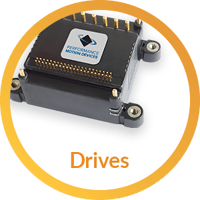
ION/CME N-Series Drives
ION®/CME N-Series Drives are high performance intelligent drives in an ultra-compact PCB-mountable package. In addition to advanced servo and stepper motor control, N-Series IONs provide s-curve point to point profiling, field oriented control, downloadable user code, general purpose digital and analog I/O, and much more. These all-in-one devices make building your next machine controller a snap.
Learn more >>
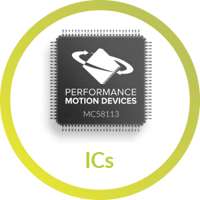
MC58113 Series ICs
The MC58113 series of ICs are part of PMD's popular Magellan Motion Control IC Family and provide advanced position control for stepper, Brushless DC, and DC Brush motors alike. Standard features include FOC (Field Oriented Control), trapezoidal & s-curve profiling, direct encoder and pulse & direction input, and much more. The MC58113 family of ICs are an ideal solution for your next machine design project.
Learn more >>
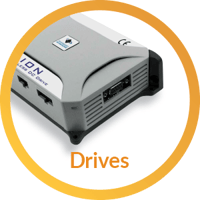
ION 500 & 3000 Drives
ION 500 and 3000 Drives are high performance intelligent drives in a compact cable-connected package. In addition to advanced servo motor control, IONs provide s-curve point to point moves, i2T power management, downloadable user code, and a range of safety functions including over current, over voltage, and over temperature detect. IONs are easy to use plug and play devices that will get your application up and running in a snap.
Learn more >>
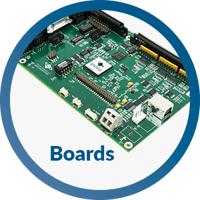
Prodigy/CME Machine Controller
Prodigy®/CME Machine Controller boards provide high-performance motion control for medical, scientific, automation, industrial, and robotic applications. Available in 1, 2, 3, and 4-axis configurations, these boards support DC Brush, Brushless DC, and stepper motors and allow user-written C-language code to be downloaded and run directly on the board. The Prodigy/CME Machine-Controller has on-board Atlas amplifiers that eliminate the need for external amplifiers.
Learn more >>
You may also be interested in:
- PMD Positioning Motion Control ICs Applications Summary (Article)
- OLogic Case Study - Robotics Design Firm (Case Study)
- ION/CME N-Series Drive Applications Summary (Article)
- Build vs. Buy of a Three Axis Motion Controller (Article)