
 QuickBytes
 For expanded discussion, read: Field-Oriented Control (FOC) - A Deep Dive For expanded discussion, read: Field-Oriented Control (FOC) - A Deep Dive |
Engineering Context: Why Servo Stability Matters
Positioning servo instability is one of the most common performance limits in motion systems.
It typically appears as:
- Oscillation and overshoot
- Audible noise and vibration
- Inconsistent positioning accuracy
- Poor low-speed behavior
These issues become more severe in:
- High-performance automation systems
- Precision robotics
- Multi-axis coordinated motion
Traditional fixes (PID tuning, filters, damping) help—but that’s not the whole story.
What Causes Servo Instability?
Most servo systems use a cascaded control structure:
- Position loop (PID) → outer loop
- Velocity loop (PI) → middle loop
- Current loop (torque control) → inner loop
Key Insight
Servo stability is strongly affected by torque control
The current loop generates motor torque. If it is inaccurate or noisy:
- Torque ripple increases
- Servo lag becomes unpredictable
- Oscillations appear
- Stability margins shrink
Accurate current regulation is therefore foundational to stable motion control.
Why Traditional Approaches Fall Short
Many systems rely on basic commutation or limited current control.
This leads to:
- Poor torque linearity
- Increased vibration and noise
- Reduced stability at low speeds
Even with careful tuning:
It will be more difficult to stabilize a system built on unstable torque control.
What Is Field-Oriented Control (FOC)?
Field-Oriented Control (FOC) is an advanced BLDC motor control technique that precisely controls motor current.
FOC works by:
- Continuously calculating rotor position
- Separating current into torque and flux components
- Applying sinusoidal current waveforms
- Maintaining optimal magnetic alignment
Result
Smooth, continuous, and highly accurate torque generation
How FOC Reduces Servo Instability
FOC improves stability at the source: torque production
1. Reduces Torque Ripple
Torque ripple is a key driver of instability.
FOC reduces ripple by generating smooth current waveforms.
Impact:
- Smoother motion
- Less excitation of mechanical resonance
- Improved stability margins
2. Stabilizes the Current Loop
FOC enables high-bandwidth current regulation.
This provides:
- Fast torque response
- Accurate tracking of commanded current
- Reduced phase lag
Accurate current control is critical for stable servo behavior.
3. Reduces Vibration and Noise
Improved current regulation over the entire motor speed range reduces vibration.
System-level benefits:
- Lower acoustic noise
- Reduced mechanical stress
- Improved reliability
More accurate current waveforms are directly linked to quieter motor operation.
4. Enables Higher Performance Tuning
Stable torque allows more aggressive position & velocity loop tuning.
With FOC:
- Higher PID gains may be more stable
- Faster settling times are achievable
- Overshoot may be reduced
- Responsiveness improves
Without FOC: tuning is limited by instability
With FOC: tuning becomes a performance tool
FOC + Advanced Motion Control Techniques
FOC strengthens other control strategies by improving torque accuracy.
Feedforward Control
Feedforward can improve tracking accuracy:
- Profile commands are executed more precisely
- Tracking error decreases
- Dynamic performance improves
Feedforward builds on the core control loop to improve accuracy.
Why FOC Matters in Modern Systems
Today’s machines require:
- Higher throughput
- Greater precision
- Lower noise
- Smaller form factors
These demands reduce stability margins.
FOC enables:
- Stable torque across a wide range of operating conditions
- Predictable dynamic behavior
- Reduced tuning time
- Higher overall system performance
Key Takeaways: FOC and Servo Stability
- Servo instability is compounded by torque control problems
- The current loop is a key component of system stability
- FOC delivers smooth, accurate torque generation
- Reduced torque ripple improves stability and motion quality
- FOC enables better system response
- Advanced techniques (feedforward) are more effective with FOC
FAQ
How does FOC improve servo performance?
FOC improves performance by generating smooth, accurate torque, reducing ripple, and stabilizing control loops.
Is FOC necessary for high-performance systems?
Yes. For modern high-precision and high-dynamic systems, FOC is typically required to achieve stable, predictable motion.
Does FOC reduce noise and vibration?
Yes. By smoothing current waveforms, FOC reduces vibration and significantly lowers audible motor noise.
Conclusion
Servo instability is not just a tuning issue—it is a control architecture issue.
Field-Oriented Control reduces instability at the source by:
- Stabilizing torque production
- Improving current loop performance
- Enabling higher system performance
FOC transforms servo stability from a tuning challenge into a design advantage
PMD Products That Provide FOC
PMD has been producing ICs that provide advanced motion control of DC Brush, Brushless DC, and stepper motors for more than twenty-five years. Since that time, we have also embedded these ICs into plug and play modules and motion control boards. While different in packaging, all of these products are controlled by C-Motion, PMD's easy to use motion control language and are ideal for use in medical, laboratory, semiconductor, robotic, and industrial motion control applications.
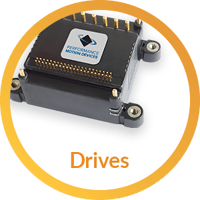
ION/CME N-Series Drives
ION®/CME N-Series Drives are high performance intelligent drives in an ultra-compact PCB-mountable package. In addition to advanced servo and stepper motor control, N-Series IONs provide s-curve point to point profiling, field oriented control, downloadable user code, general purpose digital and analog I/O, and much more. These all-in-one devices make building your next machine controller a snap.
Learn more >>
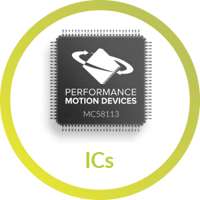
MC58113 Series ICs
The MC58113 series of ICs are part of PMD's popular Magellan Motion Control IC Family and provide advanced position control for stepper, Brushless DC, and DC Brush motors alike. Standard features include FOC (Field Oriented Control), trapezoidal & s-curve profiling, direct encoder and pulse & direction input, and much more. The MC58113 family of ICs are an ideal solution for your next machine design project.
Learn more >>
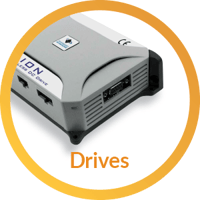
ION 500 & 3000 Drives
ION 500 and 3000 Drives are high performance intelligent drives in a compact cable-connected package. In addition to advanced servo motor control, IONs provide s-curve point to point moves, i2T power management, downloadable user code, and a range of safety functions including over current, over voltage, and over temperature detect. IONs are easy to use plug and play devices that will get your application up and running in a snap.
Learn more >>
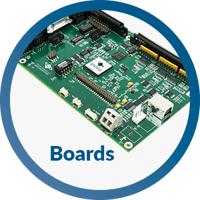
Prodigy/CME Machine Controller
Prodigy®/CME Machine Controller boards provide high-performance motion control for medical, scientific, automation, industrial, and robotic applications. Available in 1, 2, 3, and 4-axis configurations, these boards support DC Brush, Brushless DC, and stepper motors and allow user-written C-language code to be downloaded and run directly on the board. The Prodigy/CME Machine-Controller has on-board Atlas amplifiers that eliminate the need for external amplifiers.
Learn more >>
You may also be interested in:
- PMD Positioning Motion Control ICs Applications Summary (Article)
- OLogic Case Study - Robotics Design Firm (Case Study)
- ION/CME N-Series Drive Applications Summary (Article)
- Build vs. Buy of a Three Axis Motion Controller (Article)