
 QuickBytes
Engineering Context: Why Torque Ripple Becomes a System Problem
Torque ripple rarely shows up as “torque ripple.”
It appears as:
- Speed-dependent buzzing or tonal noise
- Low-speed velocity variation
- Servo tracking error at specific speeds
- Vibration in stages, linkages, or frames
- Poor surface finish or process inconsistency
Key Insight
Torque ripple is created electrically—but amplified mechanically
This is why fixing it requires both control strategy and system-level thinking.
What Is Torque Ripple in a BLDC Motor?
Torque ripple is the periodic variation in output torque during rotation.
It is caused by:
- Commutation method
- Current waveform distortion
- Motor magnetic geometry (cogging)
- Control loop timing and discretization
Important characteristics:
- Repeatable (linked to electrical or mechanical angle)
- Load-dependent (can worsen at the tool point)
What Is BLDC Torque Ripple Control?
BLDC torque ripple control is the set of techniques used to:
- Smooth commutation
- Improve current tracking
- Compensate motor nonlinearities
- Prevent mechanical amplification
Key Insight
Reducing ripple is not one fix—it’s a layered approach
Control Strategy Comparison
|
Strategy |
Ripple Outcome |
Implementation Complexity |
|
6-step (Hall) |
Highest ripple, tonal noise |
Low |
|
Sinusoidal commutation |
Lower ripple, smoother motion |
Medium |
|
FOC (vector control) |
Lowest ripple, best torque linearity |
High |
|
Torque mapping |
Excellent low-speed smoothness |
Medium |
|
Resonance control |
Reduces vibration symptoms |
Application-specific |
Five Root Causes of Torque Ripple
1. Commutation Discontinuities
- Six-step commutation creates torque steps
- Major source of vibration and noise
Largest single contributor in many systems
2. Poor Current Loop Tracking
- Torque = current × alignment
- Distorted current = distorted torque
Symptoms:
- Lagging current response
- Waveform distortion
- Increased ripple at higher speeds
Accurate current regulation is essential for stable torque output.
3. Cogging Torque (Motor Geometry)
- Caused by magnets + stator slot interaction
- Creates position-dependent torque variation
Most visible at low speed
4. Mechanical Resonance Amplification
- Ripple excites system resonances
- Small torque variation → large vibration
Common sources:
- Flexible linkages
- Belts/gears
- Light structural damping
5. Sampling, PWM, and Timing Effects
- Discrete control introduces ripple
- Loop timing and PWM frequency matter
Five Methods to Reduce Torque Ripple
Method 1 — Move to Sinusoidal or FOC Commutation
Why it works:
- Eliminates torque steps from six-step commutation
- Produces smooth current waveforms
When to prioritize:
- Audible noise
- Low-speed ripple
- Precision applications
FOC delivers the lowest ripple and best torque control across the entire speed range
Method 2 — Tune the Current Loop Properly
Why it works:
- Torque ripple is often current ripple in disguise
What to optimize:
- Current loop bandwidth
- PI gains (proportional + integral)
- PWM frequency vs motor inductance
- Current sensing accuracy
Practical checklist:
- Increase proportional gain until noise appears, then back off
- Add integral gain carefully to reduce steady-state error
- Avoid integrator windup
Method 3 — Add Torque Mapping (Cogging Compensation)
Why it works:
- Cancels position-dependent torque variation
How it works:
- Measure ripple vs rotor position
- Build lookup table
- Apply compensation to torque command
Best for:
- Ultra-smooth motion
- Low-speed precision systems
- Highest torque accuracy
Method 4 — Use Feedforward Control
Why it works:
- Reduces tracking error before it enters the feedback loop
Benefits:
- Less corrective “chatter”
- Smoother motion
- Improved dynamic accuracy
Feedforward adds control outside the servo loop to improve performance.
Method 5 — Manage Mechanical Resonance
Why it works:
- Prevents ripple from being amplified
Options:
- Shift operating speeds
- Add stiffness or damping
- Use notch/biquad filters
- Reduce trajectory aggressiveness (acceleration & jerk)
How Drive Architecture Impacts Torque Ripple
Drive design directly affects ripple outcomes.
Key factors:
- Current loop bandwidth and timing
- Commutation options (6-step, sinusoidal, FOC)
- PWM frequency
- Measurement and trace capability
Key Insight
Better drive architecture reduces ripple before tuning begins
Practical Troubleshooting Flow
When diagnosing torque ripple:
Step 1 — Identify the dominant source
- Tonal noise scaling with speed → commutation/current loop
- Vibration at specific speeds → resonance
Step 2 — Check commutation method
- Using six-step? → move to sinusoidal or FOC first
This is often the biggest improvement lever
Step 3 — Tune current loop
- Improve tracking accuracy
- Reduce waveform distortion
Step 4 — Apply torque mapping
- Target cogging and low-speed ripple
Step 5 — Address system-level effects
- Add feedforward
- Reduce resonance amplification
Key Takeaways: Reducing Torque Ripple
- Torque ripple is caused by electrical + mechanical interactions
- Commutation method is often the biggest driver
- Current loop quality determines torque accuracy
- Cogging requires position-based compensation
- Resonance determines how ripple shows up in the system
- Best results come from a layered approach
FAQ
What is the main cause of torque ripple?
The most common cause is commutation discontinuity, especially in six-step systems.
Does FOC reduce torque ripple?
Yes. FOC provides the smoothest current and lowest torque ripple by controlling the current vector precisely.
Why does torque ripple increase at low speed?
Because cogging and commutation effects dominate when velocity is low.
Can torque ripple be eliminated completely?
No—but it can be reduced enough that it no longer affects system performance.
Conclusion
Torque ripple is not a single problem—it is the result of:
- Commutation method
- Current control accuracy
- Motor geometry
- Mechanical system response
The most effective strategy is layered:
- Improve commutation (sinusoidal or FOC)
- Tune the current loop
- Add torque mapping
- Use feedforward
- Control resonance
When these are combined, torque ripple becomes negligible in real-world systems
PMD Products That Control BLDC Motors
PMD has been producing ICs that provide advanced motion control of DC Brush, Brushless DC, and stepper motors for more than twenty-five years. Since that time, we have also embedded these ICs into plug and play modules and motion control boards. While different in packaging, all of these products are controlled by C-Motion, PMD's easy to use motion control language and are ideal for use in medical, laboratory, semiconductor, robotic, and industrial motion control applications.
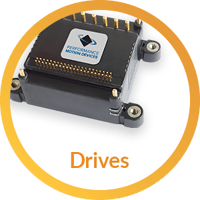
ION/CME N-Series Drives
ION®/CME N-Series Drives are high performance intelligent drives in an ultra-compact PCB-mountable package. In addition to advanced servo and stepper motor control, N-Series IONs provide s-curve point to point profiling, field oriented control, downloadable user code, general purpose digital and analog I/O, and much more. These all-in-one devices make building your next machine controller a snap.
Learn more >>
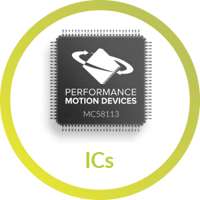
MC58113 Series ICs
The MC58113 series of ICs are part of PMD's popular Magellan Motion Control IC Family and provide advanced position control for stepper, Brushless DC, and DC Brush motors alike. Standard features include FOC (Field Oriented Control), trapezoidal & s-curve profiling, direct encoder and pulse & direction input, and much more. The MC58113 family of ICs are an ideal solution for your next machine design project.
Learn more >>
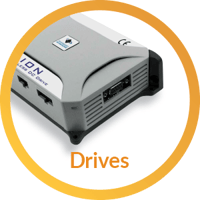
ION 500 & 3000 Drives
ION 500 and 3000 Drives are high performance intelligent drives in a compact cable-connected package. In addition to advanced servo motor control, IONs provide s-curve point to point moves, i2T power management, downloadable user code, and a range of safety functions including over current, over voltage, and over temperature detect. IONs are easy to use plug and play devices that will get your application up and running in a snap.
Learn more >>
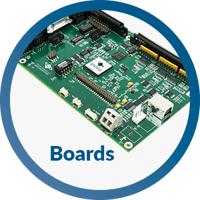
Prodigy/CME Machine Controller
Prodigy®/CME Machine Controller boards provide high-performance motion control for medical, scientific, automation, industrial, and robotic applications. Available in 1, 2, 3, and 4-axis configurations, these boards support DC Brush, Brushless DC, and stepper motors and allow user-written C-language code to be downloaded and run directly on the board. The Prodigy/CME Machine-Controller has on-board Atlas amplifiers that eliminate the need for external amplifiers.
Learn more >>
You may also be interested in:
- PMD Positioning Motion Control ICs Applications Summary (Article)
- OLogic Case Study - Robotics Design Firm (Case Study)
- ION/CME N-Series Drive Applications Summary (Article)
- Build vs. Buy of a Three Axis Motion Controller (Article)