
 QuickBytes
When engineers evaluate BLDC servo performance, they often focus on motor specifications, encoder resolution, or position accuracy. Yet one of the most important factors influencing overall motion quality operates deeper within the control architecture: the current loop.
Current loops directly regulate motor torque, making them foundational to servo stability, vibration performance, acceleration response, and motion smoothness. In many cases, the performance of the current loop determines how effectively the entire motion system can respond to changing loads and operating conditions.
For OEMs developing robotics, medical devices, semiconductor equipment, laboratory automation systems, AGVs, and industrial machinery, understanding current loop bandwidth in BLDC servo systems is essential for building high-performance products.
What Is Current Loop Bandwidth in a BLDC Servo System?
Current loop bandwidth in a BLDC servo system describes how quickly the servo drive can regulate motor current in response to a command.
Because motor current directly controls torque, current loop bandwidth has a major impact on:
- Torque response
- Servo stability
- Disturbance rejection
- Vibration performance
- Motion smoothness
- Positioning accuracy
Engineers typically improve current loop bandwidth BLDC systems achieve through:
- Fast current sensing
- Field-Oriented Control (FOC)
- High-speed control algorithms
- Accurate PWM generation
- Low-noise feedback processing
- Proper loop tuning
- Advanced motion control architectures
In precision motion systems, current loop performance is often one of the key factors that separates basic motor control from high-performance servo control.
Why Current Loops Matter in BLDC Servo Systems
Servo systems are built around multiple nested control loops.
Typically, these include:
- Current loop
- Velocity loop
- Position loop
- Motion profile generation
The current loop sits at the foundation of this hierarchy because it controls motor torque directly.
Every command issued by the position and velocity loops ultimately depends on the current loop's ability to generate the required torque quickly and accurately.
When current regulation is slow or unstable, engineers may experience:
- Torque ripple
- Servo vibration
- Longer settling times
- Poor low-speed smoothness
- Reduced positioning accuracy
- Instability during dynamic motion
- Audible motor noise
This is why high-performance motion systems begin with strong current control.
What Does Current Loop Bandwidth Mean?
Current loop bandwidth refers to the speed at which the current loop can respond to changes in commanded current.
Because current generates torque, bandwidth effectively determines how quickly the servo system can produce the forces needed to execute motion commands or reject disturbances.
A higher-bandwidth current loop can respond more quickly to:
- Acceleration commands
- Load changes
- Torque disturbances
- Direction reversals
- Dynamic motion profiles
However, bandwidth alone is not the objective.
The goal is to achieve current regulation that is fast, accurate, and stable.
Excessive bandwidth without proper control architecture can introduce noise, instability, and reduced performance.
Is Higher Current Loop Bandwidth Always Better?
Not necessarily.
A common misconception is that maximizing current loop bandwidth automatically improves servo performance.
In reality, bandwidth must be balanced against system stability, noise sensitivity, processing speed, and overall servo architecture.
A well-designed current loop should:
- Respond quickly to disturbances
- Maintain stable operation
- Avoid amplifying noise
- Support the outer velocity and position loops
- Deliver predictable torque control
The best-performing servo systems are not necessarily those with the highest bandwidth. They are the systems that achieve the optimal balance between responsiveness and stability.
This is why controller design often matters more than raw bandwidth specifications alone.
How Current Loop Bandwidth Affects Torque Response
Torque response is one of the clearest indicators of current loop performance.
Whenever a servo system accelerates, decelerates, or encounters a disturbance, the drive must adjust motor current to generate the required torque.
If current regulation is slow, torque production lags behind the command.
This can lead to:
- Sluggish motion
- Increased tracking error
- Longer settling times
- Reduced machine throughput
When current loop performance is optimized, the servo system can generate torque quickly and predictably, improving:
- Dynamic response
- Acceleration performance
- Path accuracy
- Disturbance rejection
- Motion smoothness
For precision motion applications, this directly affects overall machine performance.
Current Loop Bandwidth and Servo Stability
Current loop bandwidth plays a critical role in servo stability because it supports every outer control loop within the system.
A weak current loop limits how aggressively engineers can tune velocity and position loops. As a result, the entire servo system may become less responsive or more difficult to stabilize.
A properly designed current loop allows:
- Higher servo gains
- Improved disturbance rejection
- Reduced oscillation
- Better tracking performance
- Faster settling times
This is particularly important in applications requiring both speed and precision.
Current Loop Bandwidth and Torque Ripple Reduction
Current loop performance also affects torque ripple in BLDC motors.
Poor current regulation can create unwanted torque fluctuations that appear as vibration, acoustic noise, and uneven low-speed motion.
Improved current control helps maintain smoother phase currents, reducing torque ripple and improving overall motion quality.
Engineers interested in reducing torque ripple should recognize that motor design is only part of the solution. The servo drive's ability to regulate current accurately often has an equally significant impact on performance.
The Relationship Between Current Loops and Field-Oriented Control
Field-Oriented Control (FOC) performance depends heavily on current loop performance.
FOC continuously regulates torque-producing and flux-producing current components to generate smooth, efficient motor operation.
For this process to work effectively, current regulation must be both fast and accurate.
A strong current loop enables FOC to deliver:
- Reduced torque ripple
- Improved servo stability
- Lower vibration
- Better low-speed performance
- Improved efficiency
- Smoother torque production
Engineers evaluating Field-Oriented Control should view current loop bandwidth as one of the most important factors influencing overall FOC effectiveness.
Why Current Loop Performance Matters for Embedded Motion Systems
Many discussions about current loops focus on industrial servo drives or standalone motor control systems.
For OEMs developing embedded motion products, however, current loop performance becomes a design consideration much earlier in the development process.
Whether designing:
- Medical devices
- Robotics
- Laboratory automation systems
- Semiconductor equipment
- Mobile robots
the motion architecture selected during development often determines the achievable torque response, vibration performance, and servo stability of the final product.
As precision requirements continue to increase, motion control intelligence is becoming a core part of product design rather than a standalone subsystem.
This shift is one reason embedded motion control has become increasingly important for OEMs seeking to differentiate their products through performance.
Beyond Basic Current Control: Advanced Servo Algorithms
Modern motion systems rely on far more than simple current regulation.
Advanced controllers frequently incorporate:
- Feed-forward compensation
- Multi-loop servo control
- Electronic damping
- Notch filtering
- Resonance suppression
- Adaptive control techniques
- Advanced trajectory generation
- Real-time feedback processing
These algorithms allow the controller to actively improve system behavior rather than simply react to commands.
For OEMs developing sophisticated motion products, advanced control architecture often provides significant performance advantages without requiring extensive mechanical redesign.
Why Motion Control Architecture Matters
Current loop bandwidth is not determined by a single component.
It is the result of the entire motion control architecture working together.
Factors such as:
- Processor performance
- Current sensing accuracy
- PWM timing
- Control algorithms
- Feedback synchronization
- Noise management
- Servo tuning tools
all influence current loop behavior.
This is where motion control expertise becomes particularly important.
For OEMs, the challenge is not simply selecting a motor or tuning a servo loop. It is building a motion architecture capable of delivering stable, repeatable performance throughout the product lifecycle.
Advanced motion controllers help engineers improve torque quality, reduce vibration, maintain stability, and accelerate product development by providing a strong foundation for servo performance.
Applications That Depend on High Current Loop Performance
Robotics
Fast torque response improves path tracking, joint control, and overall system responsiveness.
Medical Devices
Smooth and predictable torque production helps improve precision, repeatability, and user experience.
Semiconductor Equipment
Low vibration and fast settling times support increasingly demanding positioning requirements.
Laboratory Automation
Accurate current control contributes to consistent motion and reliable automated workflows.
AGVs and Mobile Robotics
Improved current regulation enhances steering control, low-speed smoothness, and dynamic response.
Conclusion
Current loop bandwidth is one of the most important factors influencing BLDC servo performance.
Because current control directly determines torque production, it affects servo stability, vibration behavior, torque ripple, motion smoothness, and positioning accuracy throughout the system.
For engineers developing next-generation motion products, understanding current loop bandwidth BLDC systems require is about more than tuning a motor drive. It is about designing a motion control architecture capable of delivering fast, accurate, and stable performance under real-world operating conditions.
As precision requirements continue to increase across robotics, medical devices, laboratory automation, semiconductor equipment, and industrial machinery, current loop performance will remain a foundational element of high-performance motion control.
PMD Products That Control BLDC Servo Systems
PMD has been producing ICs that provide advanced motion control of DC Brush, Brushless DC, and stepper motors for more than twenty-five years. Since that time, we have also embedded these ICs into plug and play modules and motion control boards. While different in packaging, all of these products are controlled by C-Motion, PMD's easy to use motion control language and are ideal for use in medical, laboratory, semiconductor, robotic, and industrial motion control applications.
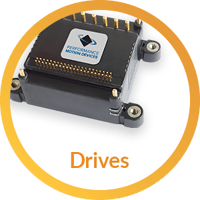
ION/CME N-Series Drives
ION®/CME N-Series Drives are high performance intelligent drives in an ultra-compact PCB-mountable package. In addition to advanced servo and stepper motor control, N-Series IONs provide s-curve point to point profiling, field oriented control, downloadable user code, general purpose digital and analog I/O, and much more. These all-in-one devices make building your next machine controller a snap.
Learn more >>
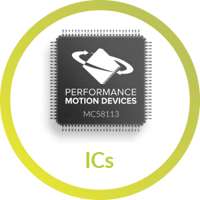
MC58113 Series ICs
The MC58113 series of ICs are part of PMD's popular Magellan Motion Control IC Family and provide advanced position control for stepper, Brushless DC, and DC Brush motors alike. Standard features include FOC (Field Oriented Control), trapezoidal & s-curve profiling, direct encoder and pulse & direction input, and much more. The MC58113 family of ICs are an ideal solution for your next machine design project.
Learn more >>
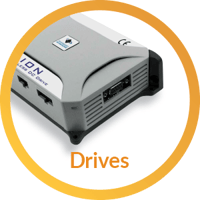
ION 500 & 3000 Drives
ION 500 and 3000 Drives are high performance intelligent drives in a compact cable-connected package. In addition to advanced servo motor control, IONs provide s-curve point to point moves, i2T power management, downloadable user code, and a range of safety functions including over current, over voltage, and over temperature detect. IONs are easy to use plug and play devices that will get your application up and running in a snap.
Learn more >>

Prodigy/CME Machine Controller
Prodigy®/CME Machine Controller boards provide high-performance motion control for medical, scientific, automation, industrial, and robotic applications. Available in 1, 2, 3, and 4-axis configurations, these boards support DC Brush, Brushless DC, and stepper motors and allow user-written C-language code to be downloaded and run directly on the board. The Prodigy/CME Machine-Controller has on-board Atlas amplifiers that eliminate the need for external amplifiers.
Learn more >>
You may also be interested in:
- PMD Positioning Motion Control ICs Applications Summary (Article)
- OLogic Case Study - Robotics Design Firm (Case Study)
- ION/CME N-Series Drive Applications Summary (Article)
- Build vs. Buy of a Three Axis Motion Controller (Article)