
 QuickBytes
 For further analysis, read the full article: How To Optimize Motor Performance Using Motion Trace For further analysis, read the full article: How To Optimize Motor Performance Using Motion Trace |
Why Motion Trace Matters
Modern motion control systems are expected to move faster, position more accurately, and operate more reliably than ever before. Whether designing a robotic arm, semiconductor stage, medical device, or automated manufacturing system, engineers are continually balancing precision, throughput, and stability.
When a machine exhibits oscillation, excessive following error, vibration, or inconsistent positioning, the underlying cause isn't always obvious. Similar symptoms can result from servo tuning, current loop behavior, mechanical resonance, trajectory generation, or changing load conditions.
Without insight into what the controller is doing internally, engineers often spend valuable time adjusting gains or modifying hardware before identifying the actual source of the problem.
Motion trace provides a more efficient approach.
By recording internal controller variables during machine operation, motion trace allows engineers to observe how the control system responds in real time, validate tuning changes, and make informed decisions based on measured performance rather than trial and error.
For precision motion applications—including robotics, semiconductor equipment, laboratory automation, medical devices, and industrial automation—motion trace can help reduce commissioning time while improving system performance and repeatability.
What Is Motion Trace?
Motion trace is a diagnostic capability that records internal motion control variables over time, allowing engineers to analyze system behavior, troubleshoot performance issues, and optimize servo control.
Instead of relying only on external observations, motion trace captures information directly from the motion controller during operation. Depending on the control platform, engineers may be able to record variables such as:
- Commanded position
- Actual position
- Position error
- Velocity
- Motor current
- Following error
- Current loop activity
- Servo control outputs
Reviewing these variables helps engineers understand how the system behaves under real operating conditions and identify issues that may not be apparent through machine observation alone.
Why Engineers Use Motion Trace
Many motion control problems produce similar symptoms even though they originate from different causes.
For example, vibration may be caused by:
- Mechanical resonance
- Aggressive servo tuning
- Current loop instability
- Feedforward settings
- Load dynamics
- Motion profile selection
Likewise, excessive following error may result from insufficient servo bandwidth, unexpected disturbances, or an improperly tuned trajectory.
Without diagnostic data, determining the true source of these issues can require multiple rounds of tuning and testing.
Motion trace simplifies this process by allowing engineers to compare commanded motion with actual system behavior. This data-driven approach makes it easier to identify root causes, validate tuning changes, and optimize performance more efficiently.
Key Insight:
Motion trace doesn't replace good servo tuning—it provides the data needed to make better tuning decisions.
By helping engineers understand how a motion system behaves under real operating conditions, motion trace supports more informed adjustments, faster troubleshooting, and more repeatable optimization.
Key Motion Control Terms
Understanding a few core motion control concepts makes motion trace data much easier to interpret.
Motion Trace
A diagnostic tool that records internal controller variables during machine operation for later analysis.
Position Error or Following Error
The difference between the commanded position and the actual motor position.
Servo Loop
The closed-loop control system responsible for regulating motor position, velocity, and torque.
Current Loop
The innermost control loop responsible for regulating motor current and producing the desired torque.
Feedforward
A control technique that anticipates system dynamics to improve tracking accuracy beyond PID control alone.
When Should You Use Motion Trace?
Motion trace is useful whenever machine performance doesn't match expectations or tuning changes fail to produce consistent improvements.
Engineers commonly use motion trace to investigate:
- Oscillation after servo tuning
- Excessive following error
- Unexpected vibration or audible noise
- Slow settling times
- Positioning accuracy problems
- Feedforward performance
- Intermittent machine behavior
- Multi-axis synchronization issues
Rather than repeatedly changing controller parameters and observing machine behavior, engineers can analyze recorded data to determine where the problem originates before making adjustments.
This often shortens development time and produces more repeatable tuning results.
Common Motion Variables to Monitor
Collecting motion trace data is only part of the process. Knowing which variables to analyze—and what they indicate—is equally important.
Position Error
Position error shows how closely the motor follows the commanded trajectory.
Large or inconsistent position error may indicate:
- Feedforward requires adjustment
- Motion profiles are too aggressive
- Servo gains need refinement
- Mechanical loading has changed
Monitoring positionerror over multiple operating conditions often provides a clearer picture of overall machine performance.
Velocity
Velocity traces help verify whether the motor is following the commanded speed profile.
Unexpected velocity changes may indicate:
- Mechanical resonance
- Load variation
- Friction
- Servo compensation issues
Reviewing velocity alongside position error often helps isolate the source of motion quality problems.
Motor Current
Motor current directly relates to torque production.
Reviewing current traces can reveal:
- Current saturation
- Unexpected load disturbances
- Torque demand spikes
- Inefficient current regulation
Current analysis is especially valuable in BLDC servo systems where stable torque production contributes to smooth, repeatable motion.
Current Loop Response
The current loop forms the foundation of servo performance because it regulates motor torque.
Evaluating current loop behavior helps engineers determine whether:
- Current commands are tracking correctly
- Bandwidth is appropriate for the application
- Disturbances are affecting torque delivery
- Current regulation remains stable during dynamic motion
For many precision motion systems, improving current loop performance can contribute to smoother motion, improved tracking accuracy, and better overall servo stability.
Five Ways Motion Trace Improves Motor Performance
1. Identify Servo Tuning Issues
Servo tuning is one of the most common applications for motion trace.
Instead of relying solely on machine behavior, engineers can observe how the controller responds throughout a commanded move and identify patterns that may not be visible during normal operation.
Motion trace can reveal:
- Overshoot after reaching the target position
- Oscillation during settling
- Slow response to command changes
- Persistent position error
- Underdamped or overdamped behavior
These observations help engineers refine proportional, integral, and derivative gains while maintaining appropriate stability margins.
Rather than making multiple tuning adjustments through trial and error, motion trace provides measurable feedback that supports a more systematic optimization process.
2. Separate Mechanical Problems from Control Problems
Mechanical resonance and servo instability often produce similar symptoms, including vibration, audible noise, and inconsistent positioning.
Without diagnostic information, distinguishing between these issues can be difficult.
Motion trace helps engineers determine whether the source of vibration originates from:
- Mechanical resonance
- Structural compliance
- Load dynamics
- Servo compensation
- Motion profile selection
- Control loop behavior
Identifying the true source of the problem allows engineers to apply the appropriate solution rather than compensating for symptoms elsewhere in the system.
3. Optimize Current Loop Performance
Current regulation plays an important role in overall servo performance because motor torque is directly related to current.
Monitoring current-related variables allows engineers to evaluate whether:
- Current commands are tracking correctly
- Current loop bandwidth is appropriate
- Torque demand exceeds available current
- Disturbances are affecting torque delivery
- Current regulation remains stable throughout the motion profile
Stable current regulation often contributes to smoother motion, improved positioning accuracy, and more predictable servo performance across a wide range of operating conditions.
4. Validate Feedforward Compensation
Feedforward compensation is often used to improve tracking accuracy by anticipating how a motion system should respond rather than relying solely on feedback corrections.
When properly implemented, feedforward can:
- Reduce following error
- Improve trajectory tracking
- Minimize settling time
- Increase machine throughput
However, tuning feedforward without visibility into system performance can be difficult.
Motion trace allows engineers to compare:
- Commanded position
- Actual position
- Velocity
- Following error
By reviewing these variables together, engineers can determine whether feedforward adjustments are improving tracking accuracy or introducing unintended behavior.
Rather than relying on machine observations alone, motion trace provides measurable data that helps validate tuning changes under actual operating conditions.
5. Reduce Development and Commissioning Time
Every tuning iteration requires engineering time.
Without diagnostic tools, engineers often spend hours adjusting parameters, repeating test moves, and evaluating results before identifying the underlying issue.
Motion trace helps streamline this process by providing objective performance data that supports more informed tuning decisions.
For many motion control applications, this can reduce:
- Development time
- Commissioning effort
- Troubleshooting cycles
- Machine downtime
- Overall engineering risk
As machine complexity increases, data-driven diagnostics become increasingly valuable for achieving predictable and repeatable system performance.
What Should Engineers Look for in a Motion Trace Tool?
Not all motion trace implementations provide the same level of diagnostic capability.
When evaluating a motion control platform, engineers should consider whether the motion trace tools support:
- Recording multiple controller variables simultaneously
- Position, velocity, current, and following error analysis
- Synchronized multi-axis data capture
- High-resolution sampling during dynamic events
- Integration with tuning and configuration software
- Easy visualization and comparison of recorded traces
- Exporting trace data for additional analysis
- Frequency-based tools such as Bode plot generation
These capabilities can make it easier to diagnose complex motion problems, validate tuning changes, and optimize machine performance throughout the development lifecycle.
Motion trace should be more than a recording feature—it should provide actionable insight into how the motion system behaves under real operating conditions.
The PMD Difference
Motion trace is most effective when it is integrated into the overall motion development workflow rather than treated as a standalone diagnostic feature.
PMD's motion control platforms combine motion trace with configuration, tuning, and analysis tools that allow engineers to observe system behavior while optimizing position, velocity, and current-loop performance.
This integrated approach helps engineers:
- Identify root causes more quickly
- Validate tuning changes with recorded data
- Compare machine performance before and after optimization
- Troubleshoot complex multi-axis systems
- Reduce time spent iterating through trial-and-error adjustments
Rather than switching between multiple software tools or relying exclusively on external instrumentation, engineers can analyze controller behavior within a consistent development environment.
This approach can simplify commissioning, accelerate development, and provide greater confidence that system changes are improving overall machine performance.
Motion Trace in Real-World Applications
Motion trace is commonly used throughout the development and commissioning process for precision motion systems.
Robotics
Engineers can evaluate servo response during rapid acceleration, coordinated motion, and changing payload conditions to improve repeatability and motion quality.
Semiconductor Equipment
High-speed positioning stages often require extremely accurate motion profiles. Motion trace helps identify following error, vibration, and settling characteristics that affect throughput and positioning accuracy.
Medical Devices
Applications such as diagnostic equipment and laboratory automation benefit from repeatable motion and smooth servo performance. Motion trace helps validate tuning while minimizing unnecessary machine movement.
Precision Manufacturing
Manufacturing systems frequently operate under changing loads and production speeds. Motion trace allows engineers to compare system performance across multiple operating conditions and optimize machine behavior.
Multi-Axis Motion Systems
Capturing synchronized data from multiple axes helps engineers understand how coordinated motion affects overall machine performance and simplifies troubleshooting during commissioning.
Key Takeaways
- Motion trace provides visibility into internal controller behavior that is difficult to observe through machine operation alone.
- Recorded data helps engineers identify the root causes of servo instability, vibration, and positioning errors.
- Motion trace supports more efficient tuning by reducing reliance on trial-and-error adjustments.
- Evaluating current, position, velocity, and following error together provides a more complete understanding of system performance.
- Integrated diagnostic tools simplify development, commissioning, and long-term machine optimization.
- When evaluating motion control platforms, engineers should consider the quality of the diagnostic and analysis tools—not just the controller's motion specifications.
Frequently Asked Questions
What is motion trace in motion control?
Motion trace records internal controller variables over time, allowing engineers to analyze system behavior, diagnose performance issues, and optimize servo control.
What problems can motion trace help diagnose?
Motion trace can help identify servo instability, excessive following error, mechanical resonance, current-loop behavior, feedforward performance, and other motion-related issues that affect system performance.
What should I look for in a motion trace tool?
When evaluating motion control platforms, consider whether the motion trace tool supports configurable trace variables, synchronized multi-axis recording, high-resolution sampling, integration with tuning software, and analysis of position, velocity, current, and following error.
Is motion trace only useful during development?
No. Motion trace is also valuable during commissioning, troubleshooting, machine optimization, and ongoing maintenance because it provides objective performance data throughout the system lifecycle.
How does motion trace support better motion control?
By providing insight into how the controller behaves during operation, motion trace helps engineers make informed tuning decisions, validate changes, and optimize overall machine performance.
Explore PMD Motion Control Solutions
Optimizing a motion control system requires more than selecting the right hardware—it requires the ability to understand how the entire system behaves during real-world operation.
PMD's motion control platforms combine integrated tuning, diagnostic, and motion analysis capabilities to help engineers develop, commission, and optimize precision motion systems more efficiently.
Whether you're improving servo stability, reducing following error, or validating system performance, PMD provides the tools and expertise to support every stage of the motion control development process.
Explore PMD motion control solutions to learn more about optimizing high-performance motion systems.
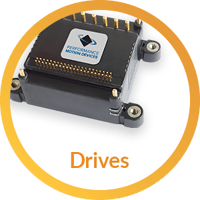
ION/CME N-Series Drives
ION®/CME N-Series Drives are high performance intelligent drives in an ultra-compact PCB-mountable package. In addition to advanced servo and stepper motor control, N-Series IONs provide s-curve point to point profiling, field oriented control, downloadable user code, general purpose digital and analog I/O, and much more. These all-in-one devices make building your next machine controller a snap.
Learn more >>
MC58113 Series ICs
The MC58113 series of ICs are part of PMD's popular Magellan Motion Control IC Family and provide advanced position control for stepper, Brushless DC, and DC Brush motors alike. Standard features include FOC (Field Oriented Control), trapezoidal & s-curve profiling, direct encoder and pulse & direction input, and much more. The MC58113 family of ICs are an ideal solution for your next machine design project.
Learn more >>
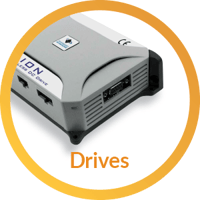
ION 500 & 3000 Drives
ION 500 and 3000 Drives are high performance intelligent drives in a compact cable-connected package. In addition to advanced servo motor control, IONs provide s-curve point to point moves, i2T power management, downloadable user code, and a range of safety functions including over current, over voltage, and over temperature detect. IONs are easy to use plug and play devices that will get your application up and running in a snap.
Learn more >>

Prodigy/CME Machine Controller
Prodigy®/CME Machine Controller boards provide high-performance motion control for medical, scientific, automation, industrial, and robotic applications. Available in 1, 2, 3, and 4-axis configurations, these boards support DC Brush, Brushless DC, and stepper motors and allow user-written C-language code to be downloaded and run directly on the board. The Prodigy/CME Machine-Controller has on-board Atlas amplifiers that eliminate the need for external amplifiers.
Learn more >>
You may also be interested in:
- PMD Positioning Motion Control ICs Applications Summary (Article)
- OLogic Case Study - Robotics Design Firm (Case Study)
- ION/CME N-Series Drive Applications Summary (Article)
- Build vs. Buy of a Three Axis Motion Controller (Article)