
 QuickBytes
Engineering Context: Why Multi-Axis Architecture Decisions Matter
Modern automation systems rarely control a single motor. Robotics platforms, semiconductor equipment, medical devices, and precision manufacturing systems frequently coordinate multiple BLDC axes simultaneously. In these applications, system performance depends not only on the motor or drive but on the multi-axis BLDC architecture used to control them.
Selecting the correct architecture is a system-level design decision. It affects:
- synchronization accuracy between axes
- control loop latency
- wiring complexity
- system scalability
- reliability in industrial environments
Machine designers are often asked to build systems with tighter motion synchronization and higher dynamic performance. Achieving those goals depends heavily on where control loops are executed and how the system coordinates multiple motors.
Two primary approaches dominate modern motion systems:
- Embedded multi-axis control, where one controller manages several motors
- Distributed drive architectures, where each axis has its own local drive
Understanding the tradeoffs between these architectures helps robotics and automation teams design systems that meet both performance and scalability requirements.
What Is Multi-Axis BLDC Architecture?
Multi-axis BLDC architecture refers to the control system structure used to coordinate multiple brushless motors within a single machine. It defines where motion control algorithms run, how motor drives communicate, and how synchronization between axes is maintained.
In practical terms, the architecture determines:
- where servo loops are closed
- how motion commands are distributed
- how tightly motors can be synchronized
These decisions directly influence system responsiveness, reliability, and implementation complexity.
Key Motion Control Terms Related to Multi-Axis Architecture
Embedded motor control
Embedded motor control refers to architectures where a centralized controller executes servo loops for multiple axes. The controller communicates with amplifiers or power stages while maintaining synchronized motion control.
Distributed motor control
Distributed motor control places control loops within individual drives located near each motor. Higher-level controllers coordinate motion through network communication.
BLDC synchronization
BLDC synchronization refers to the ability to coordinate the motion of multiple motors so their position, velocity, and torque remain precisely aligned during system operation.
Motion controller architecture
Motion controller architecture defines how trajectory generation, servo loops, current loops, and system communication are organized within a multi-axis motion system.
Loop closure location
Loop closure location describes where control loops (position, velocity, or current) are executed — either centrally within a controller or locally inside each motor drive.
Size Reduction
A single embedded controller generally results in the smallest overall envelope.
Embedded BLDC Control Architecture
Embedded architectures place multi-axis motion control inside a centralized controller. The controller executes trajectory generation and servo loops for all axes while coordinating the amplifiers that drive each motor.
In this architecture:
- motion control algorithms run in one processor
- servo loops are synchronized by the same timing source
- drives primarily perform power amplification
This approach is common in robotics, semiconductor tools, and coordinated motion systems.
Advantages of Embedded Control
Deterministic synchronization
All axes share a single control clock, enabling precise multi-axis coordination.
Low inter-axis latency
Position and velocity updates occur within the same controller cycle.
Simplified coordination
Complex motion trajectories involving multiple motors are easier to implement.
Centralized system tuning
Engineers can observe and tune all axes from a single control environment.
Constraints of Embedded Control
However, embedded architectures also introduce design considerations:
- controller computational load increases with axis count
- centralized hardware may limit scalability
- wiring harnesses may become larger in large machines
- Combined package size of multiple drives generally exceeds size of single embedded controller
Despite these tradeoffs, embedded control is often preferred when tight motion coordination is required.
Distributed Drive Architecture
Distributed architectures move the servo control loops into the drives themselves. Each motor has a dedicated drive responsible for its control loops.
A central controller sends commands over a communication network such as EtherCAT or CAN.
In this architecture:
- each drive performs its own control calculations
- the network coordinates motion commands
- loop closure occurs locally within each drive
This approach is common in modular automation systems and large industrial machines.
Advantages of Distributed Control
Improved scalability
Additional axes can be added without increasing central processor load.
Reduced cabling
Drives located near motors shorten power wiring.
Modular machine design
Subsystems can be integrated independently.
Fault isolation
Failures in one axis are less likely to disrupt others.
Constraints of Distributed Control
Distributed systems also introduce engineering challenges:
- network latency affects synchronization
- deterministic timing may require advanced protocols
- tuning across multiple drives can be more complex
For tightly synchronized motion systems, network timing must be carefully managed.
Deterministic Synchronization Considerations
Synchronization is one of the most important factors in multi-axis motion control.
Embedded architectures naturally provide deterministic synchronization because all axes share the same control processor and clock.
Distributed systems rely on network synchronization protocols. These protocols attempt to maintain precise timing across multiple devices, but performance depends on:
- network latency
- communication jitter
- device synchronization accuracy
For robotics and precision automation, even small synchronization errors can produce mechanical stress, positioning errors, or vibration.
Latency and Loop Closure Location
Loop closure location strongly influences system latency.
|
Architecture |
Loop Closure |
Latency Characteristics |
|
Embedded control |
Centralized controller |
Very low latency |
|
Distributed drives |
Local drive processors |
Network-dependent latency |
Lower latency improves:
- servo responsiveness
- disturbance rejection
- coordination accuracy between axes
For high-performance robotics or semiconductor equipment, minimizing latency is often critical.
Cabling, Noise, and System Reliability
System architecture also affects electrical and mechanical reliability.
Embedded architecture considerations
Centralized control often requires longer motor power cables connecting motors to amplifiers or control electronics.
This can increase:
- EMI exposure
- cable management complexity
However, centralized architecture simplifies system monitoring.
Distributed architecture considerations
Placing drives near motors shortens power cables and reduces electrical noise risk.
However, distributed architectures require reliable communication networks and robust synchronization protocols.
Cost and Scalability Comparison
|
Architecture |
Cost Factors |
Scalability |
|
Embedded control |
Single controller generally has total lower cost |
Moderate scalability |
|
Distributed control |
Multiple drive controllers required |
High scalability |
Embedded systems are often ideal for machines with tightly coordinated motion and moderate axis counts.
Distributed systems excel in large modular systems where axes operate semi-independently.
Architecture Decision Matrix
The following decision matrix can help engineers evaluate which architecture fits their system.
|
System Requirement |
Preferred Architecture |
|
Tight multi-axis synchronization |
Embedded control |
|
Large machine with many axes |
Distributed control |
|
Modular subsystems |
Distributed control |
|
Precision coordinated motion |
Embedded control |
|
Simplified wiring near motors |
Distributed control |
In many machines, hybrid architectures are also used, combining centralized motion control with distributed amplifiers.
Practical Design Recommendations
When selecting a multi-axis BLDC architecture, engineers should consider several practical factors.
Evaluate synchronization requirements
If the application requires tight coordinated motion between multiple axes, embedded control architectures often provide more deterministic synchronization.
Consider system scalability
Machines expected to expand to large axis counts may benefit from distributed architectures.
Analyze communication latency
Network communication introduces delay. Ensure the selected architecture supports the required control bandwidth.
Review system diagnostics and tuning tools
Centralized systems often simplify system diagnostics because all motion data is accessible from one controller environment.
Control Architectures Matter
Modern motion platforms increasingly integrate motion control algorithms, synchronization mechanisms, and drive coordination into unified architectures.
Technologies such as multi-axis motion control ICs and integrated machine controllers provide deterministic timing and precise synchronization between axes. These architectures allow engineers to implement trajectory generation, servo loops, and synchronization logic within a single control framework.
Integrated platforms such as Magellan motion control ICs and Prodigy/CME Machine-Controllers are designed to support coordinated motion systems with multiple BLDC axes. By combining motion algorithms with deterministic execution timing, these architectures simplify system design while maintaining high-performance motion control.
Key Takeaways: Multi-Axis BLDC Architecture
- Multi-axis BLDC architecture determines how multiple motors are synchronized and controlled within a machine.
- Embedded control architectures provide deterministic synchronization and low latency.
- Distributed drive architectures improve scalability and modular system design.
- Loop closure location significantly influences system responsiveness.
- Architecture selection should be based on synchronization requirements, scalability, system complexity, and cost targets.
Selecting the right architecture ensures that multi-axis motion systems deliver reliable performance and precise coordination.
FAQ
What is a multi-axis BLDC architecture?
A multi-axis BLDC architecture defines how multiple brushless motors are coordinated within a machine, including where control loops run and how drives communicate with each other.
What is the difference between embedded and distributed motor control?
Embedded motor control uses a centralized controller to manage multiple axes, while distributed motor control places control loops within individual drives located near each motor.
When should distributed motor control be used?
Distributed architectures are often used in large machines or modular systems where scalability and reduced cabling complexity are priorities.
Select the Right Multi-Axis BLDC Architecture
Choosing between embedded and distributed motion control architectures requires evaluating synchronization accuracy, latency, scalability, and system complexity.
Engineers designing robotics and automation systems should evaluate these factors early in the design process to ensure the architecture supports the required motion performance.
Select the Right Multi-Axis BLDC Architecture by reviewing system synchronization requirements, communication latency, and future scalability needs.
PMD Products That Support BLDC Systems
Performance Motion Devices has been producing motion control ICs that provide advanced position, velocity, and torque control of BLDC motors for more than twenty-five years. Since that time, we have incorporated these ICs into a variety of brushless motor drives and motion control boards. All of these products utilize C-Motion, PMD's easy to use motion software library.
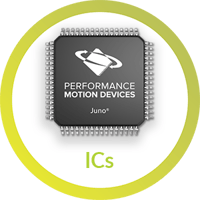
MC73112 Brushless Motor Torque Control IC
The MC73112 and MC73112N single axis control ICs are members of PMD’s Juno family of ICs and are a perfect solution for low cost, high performance BLDC motor control. The MC73112 provides advanced features such as Field Oriented Control, high/low PWM bridge control signals, leg current sensing, and more. Available in packages as small as 7mm x 7mm and costing $12 in quantity, these ICs are an ideal solution for your next machine design project using brushless motors.
Learn more >>
MC73113 Brushless Motor Velocity Control IC
The MC74113 and MC74113N are members of the Juno family of ICs and are perfect for building low cost, high performance stepper motor controllers. Juno ICs feature advanced two-phase waveform generation, high/low switching amplifier control signals, leg current sensing, and more. Available in packages as small as 7mm x 7mm and costing $12 in quantity, these ICs are an ideal solution to upgrade your existing pulse & direction controller for microstepping or closed loop stepper operation, or for starting your next machine design project from scratch.
Learn more >>
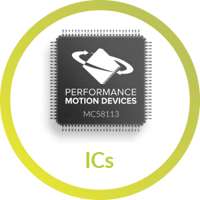
MC53113 Brushless Motor Positioning Control IC
The MC53113 single axis control IC is a member of PMD’s Magellan family of ICs and is a perfect solution for low cost, high performance BLDC motor control. The MC53113 provides advanced features such as s-curve profile generation, PID position loop control with feedforward, two direct encoder channel inputs, Field Oriented Control, direct PWM bridge signals, and more. Available in a 100-pin TQFP package the MC53113 IC is an ideal solution for your next machine design project using brushless motors.
Learn more >>
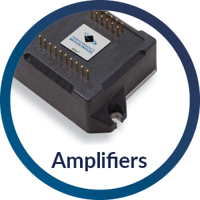
Atlas Brushless Motor Amplifier
Atlas BLDC Motor Amplifiers are compact single-axis amplifiers that provide high-performance FOC current control of three-phase brushless DC motors. Atlas amplifiers are PCB-mountable modules measuring as small as 27 x 27 x 14mm, come in both a vertical and horizontal mounting configuration and are available in three power ranges: 75W, 250W, and 500W.
Learn more >>
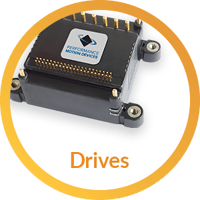
ION/CME N-Series Brushless Motor Drive
N-Series ION Drives are ultra-compact single-axis PCB-mountable brushless motor drives that provide S-curve point to point profiling, quadrature, sin/cos, and BiSS-C encoder input, downloadable user code, general purpose digital and analog I/O, advanced PID position loop control, and much more. They support Ethernet, RS232, RS485, CAN FD, and SPI (Serial Peripheral Interface) communications. N-Series ION Drives measure just 37 x 37 x 17mm and are available in three power ranges: 75W, 350W, and 1,000W.
Learn more >>
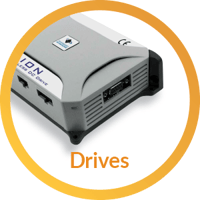
ION 500/3000 Brushless Motor Drive
ION 500 and ION 3000 Series Drives are compact single-axis cable-connected brushless motor drives that provide S-curve point to point profiling, quadrature encoder input, downloadable user code, general purpose digital and analog I/O, advanced PID position loop control, and much more. They support Ethernet, RS232, RS485, and CANbus communications. ION 500 drives provide 500W with 12-56V DC supply input and ION 3000 Drives provide 3,000W with 20-190V DC supply input.
Learn more >>
You may also be interested in:
- PMD Positioning Motion Control ICs Applications Summary (Article)
- OLogic Case Study - Robotics Design Firm (Case Study)
- ION/CME N-Series Drive Applications Summary (Article)
- Build vs. Buy of a Three Axis Motion Controller (Article)